
Selected: Men from Spinifex Country
24 Aug
Ned Grant
Timo Hogan
Lawrence Pennington
IN ASSOCIATION WITH SPINIFEX ARTS PROJECT
On exhibition at
OUTSTATION GALLERY
8 Parap Place
Parap
OPENING HOURS
Tues to Fri 10 am – 5 pm
Sat 10 am – 2 pm


The Spinifex Arts Project emerged out of work made for a Native Title claim determined in 2001. Selected celebrates the unbroken chain of knowledge and law intrinsic to the Spinifex people that is expressed through their remarkable paintings.
Forming a distinctly identifiable style, Spinifex artists have continued to flourish and their work has been rewarded with national and international recognition.
This new series of work by four male artists, Lawrence Pennington, Fred Grant, Ned Grant and Timo Hogan, embodies the spirit and connection to country through their practice. The stories, the landscape and the relationship between inma (the singing of country) and the act of painting, imbue these works with the powerful knowledge and sense of place and identity of the artists.
IMAGE: Ned Grant, Tjintir-Tjintirpa (detail), 2019, acrylic on linen, 2000 x 1370 mm, 19-143
paintings

Timo Hogan
2019, acrylic on linen
1370 x 1100 mm
Cat No. 19-121
Selected: Men from Spinifex Country
Spinifex Arts Project
On exhibition at Outstation Gallery
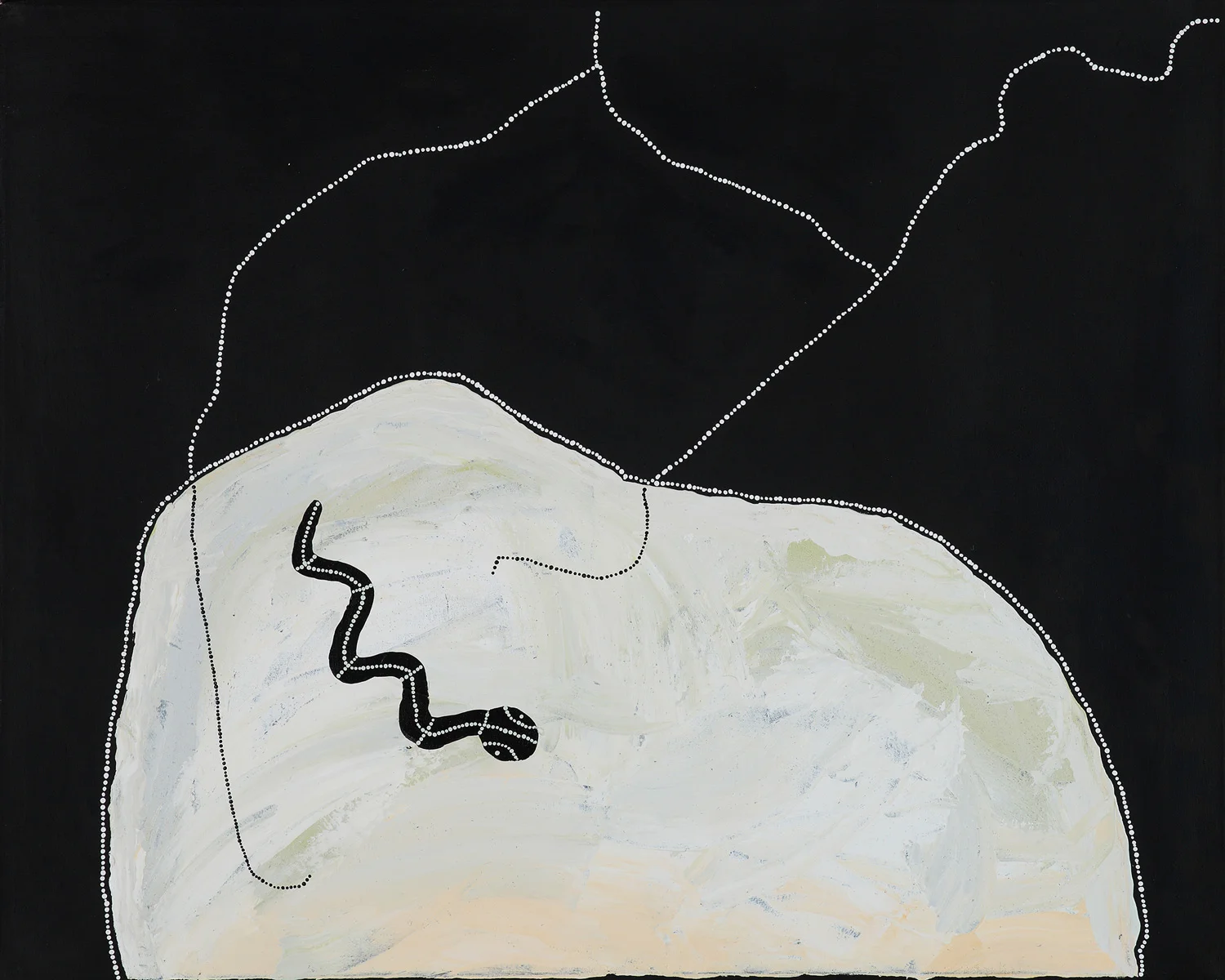
Wait Wanampi (Water Serpent Man). He is gone. He is out hunting, looking for kaka (game). He gets up really high and he can smell that kaka malu (kangaroo). And then pungu (he hits the game). He'll come back after.
Timo Hogan depicts the incarnations that form the narrative for his country of Lake Baker. Lake Baker holds the Wati Kutjara Tjukurpa (Two Men Creation Line) and is guarded by a powerful Wati Wanampi (Water Serpent Man) who must be appeased by ritual before approach. These are Creation beings and as such, they shaped the landscape as they moved through it. Making the indelible physical realm that exists today and attaching far reaching moral narratives to their exploits that still guide people today.
Timo Hogan
2019, acrylic on linen
1370 x 1100 mm
Cat No. 19-124
Selected: Men from Spinifex Country
Spinifex Arts Project
On exhibition at Outstation Gallery
Wait Wanampi (Water Serpent Man). He is gone. He is out hunting, looking for kaka (game). He gets up really high and he can smell that kaka malu (kangaroo). And then pungu (he hits the game). He'll come back after.
Timo Hogan depicts the incarnations that form the narrative for his country of Lake Baker. Lake Baker holds the Wati Kutjara Tjukurpa (Two Men Creation Line) and is guarded by a powerful Wati Wanampi (Water Serpent Man) who must be appeased by ritual before approach. These are Creation beings and as such, they shaped the landscape as they moved through it. Making the indelible physical realm that exists today and attaching far reaching moral narratives to their exploits that still guide people today.

Timo Hogan
2019, acrylic on linen
1370 x 1100 mm
Cat No. 19-139
Selected: Men from Spinifex Country
Spinifex Arts Project
Timo Hogan has depicted the significant site of Lake Baker situated to the north of traditional Spinifex Lands. It is here that a powerful wanampi (water serpent) resides and guards his abode. Timo says 'here he's about to go out hunting, looking for kuka (game) and coming home bigger than when he left. Timo also depicts the creeks that feed into the lake and replenish the home of the wanampi.
Timo Hogan depicts the incarnations that form the narrative for his country of Lake Baker. Lake Baker holds the Wati Kutjara Tjukurpa (Two Men Creation Line) and is guarded by a powerful Wati Wanampi (Water Serpent Man) who must be appeased by ritual before approach. These are Creation beings and as such, they shaped the landscape as they moved through it. Making the indelible physical realm that exists today and attaching far reaching moral narratives to their exploits that still guide people today.

Timo Hogan
2019, acrylic on linen
1370 x 1400 mm
Cat No. 19-140
Selected: Men from Spinifex Country
Spinifex Arts Project
Timo Hogan has depicted his country of Lake Baker to the north of traditional Spinifex Lands. It is here that a powerful wanampi (water serpent) resides and must be pacified by ritual for even family to enter. Timo says he has depicted the wanampi after he has been out hunting for any kuka (game) he can find. He is looking well fed so he must have been successful. Timo states that he will kill and eat camels because they destoy the water source which is his home. Surrounding the lake, Timo has depicted the creek lines where the Wati Kutjara (Two Men) watch on from.

Timo Hogan
2019, acrylic on linen
1370 x 1100 mm
Cat No. 19-142
Selected: Men from Spinifex Country
Spinifex Arts Project
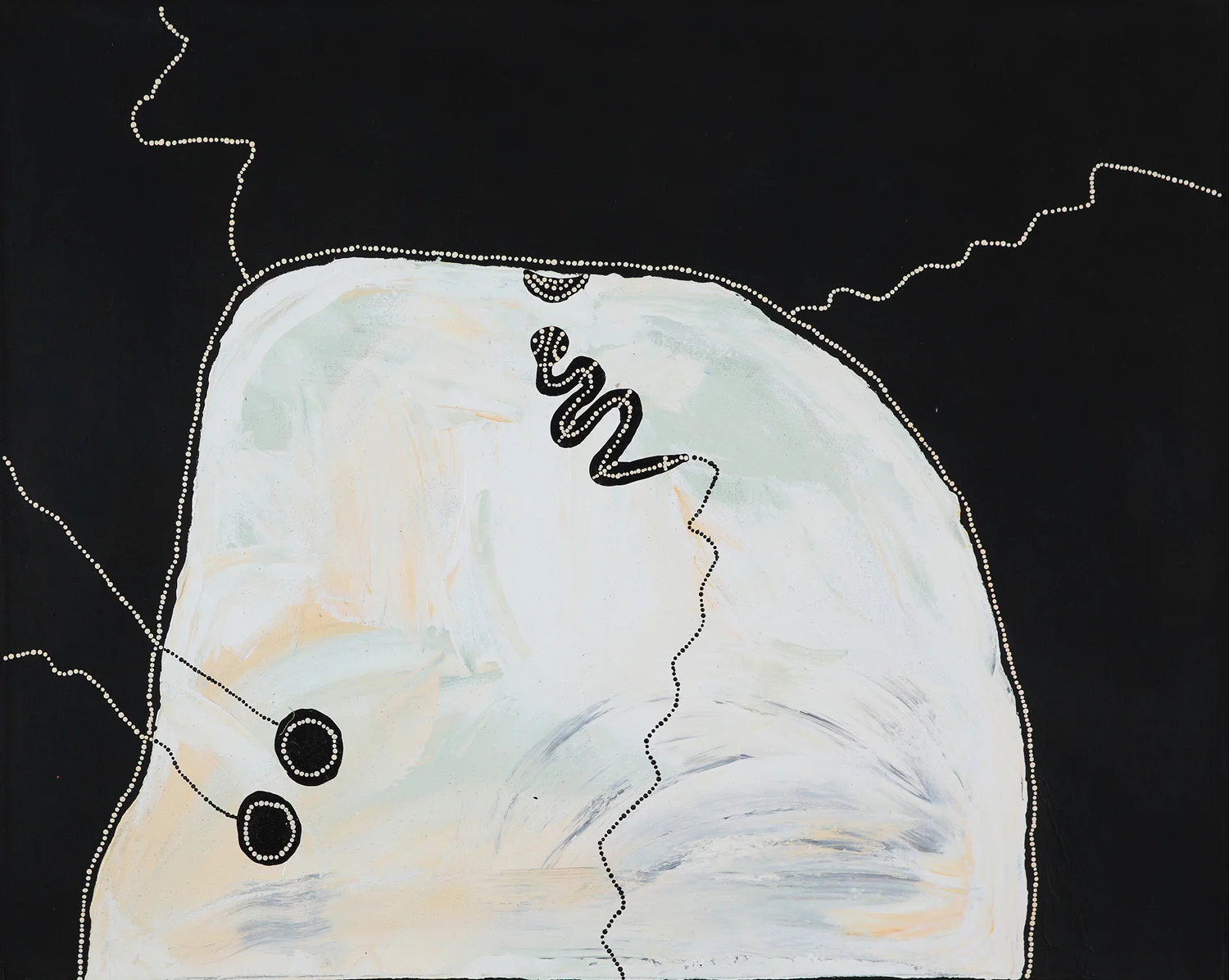
Timo Hogan has depicted the significant site of Lake Baker, situated to the north of traditional Spinifex Lands. It is here that a powerful wanampi (water serpent) guards his ngura (home). Timo has depicted wati kutjara (two men) entering the lake from another ngura, they are strangers. The wanampi approaches and tells them they must leave but the men stand firm and insist they are family and mean no harm. The wanampi finally recognises them as family and allows them access into the lake.
These are creation beings who shaped the spiritual narrative of the landscape as they moved through it. Leaving behind the dramatised morality that is the basis of the oral history and the religious compass that guides people on a daily basis.
Timo Hogan
2019, acrylic on linen
1370 x 1100 mm
Cat No. 19-149
Selected: Men from Spinifex Country
Spinifex Arts Project
That Wanampi (Water Serpent), Wati Wanampi (Water Serpent Man) is going back to his ngura (home). It is salty water, his home is salty water. He can't see. His eyes are no good from the salty water but he can smell. And he can smell those Wati Kutjara (Two Men). He can smell them on the other side. Other side of Lake Baker.
Timo Hogan depicts the incarnations that form the narrative for his country of Lake Baker. Lake Baker holds the WatiKutjara Tjukurpa (Two Men Creation Line) and is guarded by a powerful Wati Wanampi (Water Serpent Man) who must be appeased by ritual before approach. These are Creation beings and as such, they shaped the landscape as they moved through it. Making the indelible physical realm that exists today and attaching far reaching moral narratives to their exploits that still guide people today.

Timo Hogan
2019, acrylic on linen
1370 x 1100 mm
Cat No. 19-197
Selected: Men from Spinifex Country
Spinifex Arts Project
That Wanampi (Water Serpent), Wati Wanampi (Water Serpent Man) is going back to his ngura (home). It is salty water, his home is salty water. He can't see. His eyes are no good from the salty water but he can smell. And he can smell those Wati Kutjara (Two Men). He can smell them on the other side. Other side of Lake Baker.
Timo Hogan depicts the incarnations that form the narrative for his country of Lake Baker. Lake Baker holds the WatiKutjara Tjukurpa (Two Men Creation Line) and is guarded by a powerful Wati Wanampi (Water Serpent Man) who must be appeased by ritual before approach. These are Creation beings and as such, they shaped the landscape as they moved through it. Making the indelible physical realm that exists today and attaching far reaching moral narratives to their exploits that still guide people today.

Timo Hogan
2019, acrylic on linen
1370 x 1100 mm
Cat No. 19-183
Selected: Men from Spinifex Country
Spinifex Arts Project

Timo Hogan
2019, acrylic on linen
1370 x 1100 mm
Cat No. 19-213
Selected: Men from Spinifex Country
Spinifex Arts Project
Timo Hogan
2019, acrylic on linen
2300 x 2000 mm
Cat No. 19-288
Selected: Men from Spinifex Country
Spinifex Arts Project
Wanampi got track there. Where he came in.
Timo Hogan has depicted the significant site of Lake Baker situated to the north of traditional Spinifex Lands. He describes the track left behind as the Wanampi (Water Serpent) returns to his rockhole home at the side of the lake. Also telling of the Two Men who were watching as he returned and saw him rise up into the air before he descended into his abode. These are creation beings and as such they shaped the landscape as they moved through it leaving areligious narrative throughout the physical realm.

Ned Grant
2019, acrylic on linen
2000 x 1370 mm
Cat No. 19-143
Selected: Men from Spinifex Country
Spinifex Arts Project
Ned Grant weaves the wata (root systems) from the Ngalta (desert kurrajong), Katiya (western myall) and kukara (sheoak) through the vast country they inhabit, making them reach across the significant sites, linking the landscape together and giving the flora the powerful presence it commands. These trees are all part of the spiritual fabric that permeates the environment that Ned Grant depicts, a landscape formed by the first beings as they traversed it, leaving indelible physical reminders of their power and presence.
In this composition, Ned places the sites holding the Tjintir-Tjintirpa Tjukurpa (Willy Wagtail Creation Line) a religious narrative that follows the unfolding events of Minyma Tjintir-Tjintirpa (Willy Wagtail Woman), whose name is Yina, as she traverses the surrounding terrain, leaving behind the drama in the physical realm at the sites of Yawarnya, Munyul and Kukaratja. Then further still in country connected by the flora Ned depicts, the sites of Tjutalatjara, Apalinya, Miratipi and Pirakara.

Ned Grant
2019, acrylic on linen
1100 x 850 mm
Cat No. 19-215
Selected: Men from Spinifex Country
Spinifex Arts Project
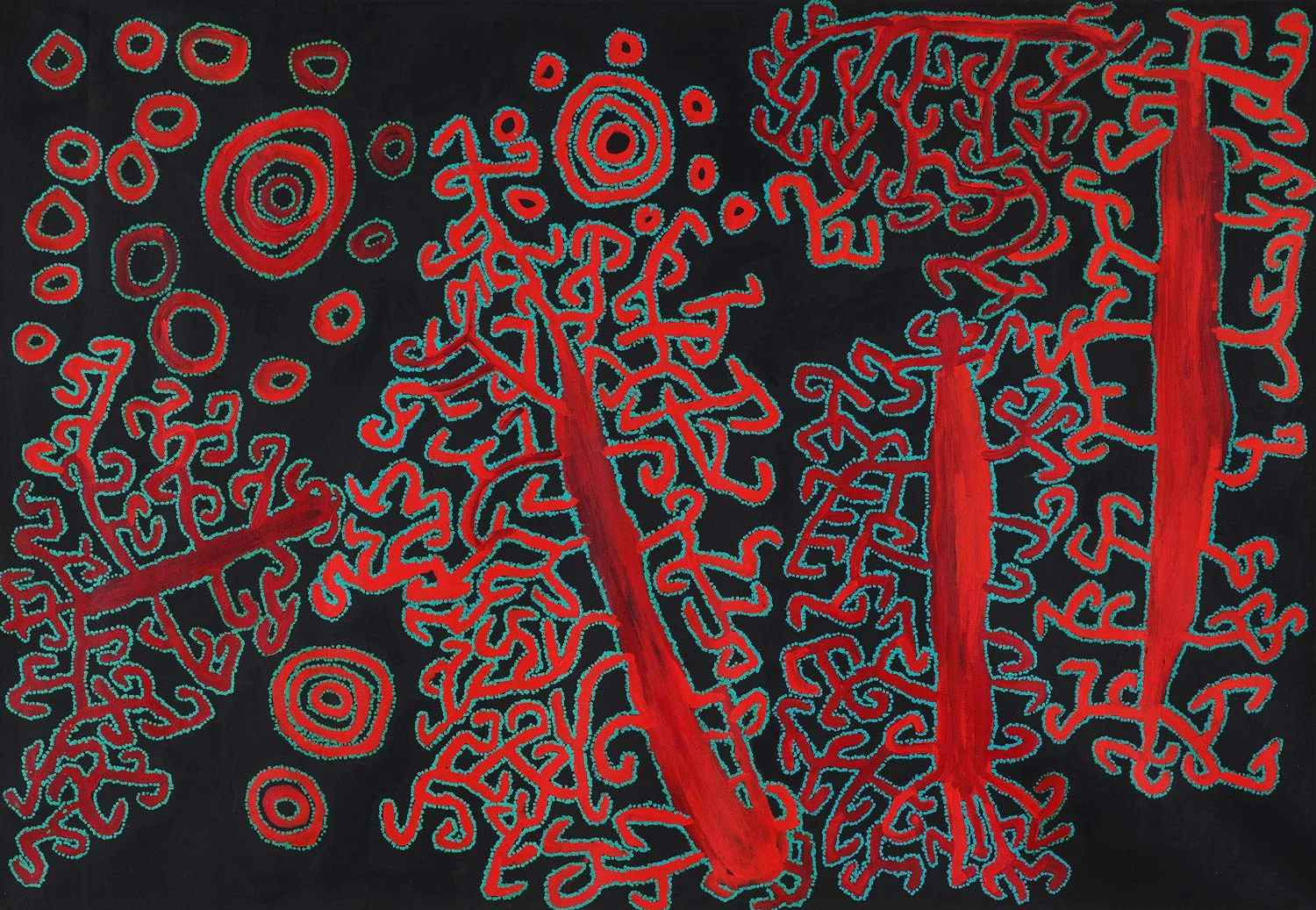
Ned has painted the significant site of Palpatatjara, a major site in the east of traditional Spinifex Lands. This is a site of the Wati Kutjara Tjukurpa (Two Men Creation Line) and follows two brothers as they traverse Spinifex Country. One is Mulya Maru (Black Nosed Monitor) and the other is Tingka (Sand Goanna). These men are creation beings and as such, have the power to transform themselves and the landscape the inhabit. They leave behind the physical and moral reminders of their presence and power that Anangu still are guided by today.
Ned Grant
2019, acrylic on linen
2000 x 1370 mm
Cat No. 19-252
Selected: Men from Spinifex Country
Spinifex Arts Project
Ned Grant follows the wata (tree roots) underground as they search for life affirming water sources. He sees them intertwined in the fabric of the significant sites he paints, depicting them as metamorphic beings from creation or as life saving water catchments in times of drought. This linking with this flora permeates all of Ned's work as he identifies with the spiritual connection the trees have always possessed across the lands and through eons. Today his journey takes him to Palpatatjara and the sacred site of the Tjulpu Tjuta Tjukurpa (Many Birds Creation Line) that tells of the epic journey of the bird men who travelled south to save the world from the rising sea waters. These are creation beings and as such created the landscape as they journeyed through it, leaving a religious narrative within the indelible physical reminders of their power and presence.

Ned Grant
2019, acrylic on linen
2000 x 1370 mm
Cat No. 19-144
Selected: Men from Spinifex Country
Spinifex Arts Project
Ned Grant weaves the flora of country into the sacred. He extends the far reaching limbs of the Ngalta (Desert Kurrajong) to manifest into the first beings. Here he depicts Wati Kutjara Tjukurpa (Two Men Creation Line) as an intrinsic part of the landscape they inhabit. They are at once the flora, in the form of trees and then as the form they took within Creation – the sand goanna and the black nosed monitor. These two men, who had the metamorphic powers of transformation, shaped the physical landscape as they moved through it and left a drama filled oral creationist religion that guides people on a daily basis. Here Ned tells of the significant sites of Angkangu and Pirakara where the two men stayed for a period of time. These events cannot be elaborated on. Milmilpa (sacred).
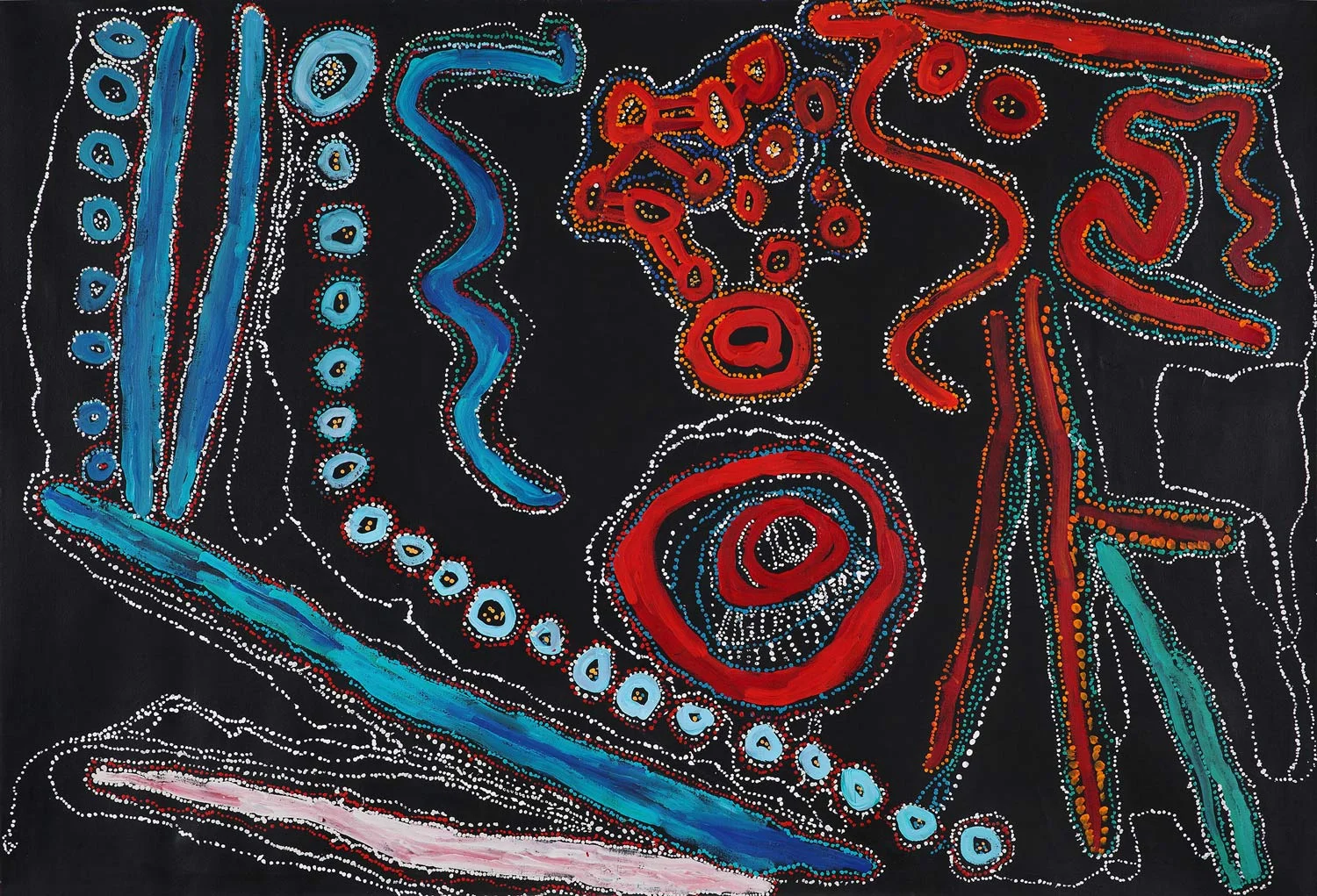
Lawrence Pennington
2019, acrylic on linen
2000 x 1370 mm
Cat No. 19-176
Selected: Men from Spinifex Country
Spinifex Arts Project
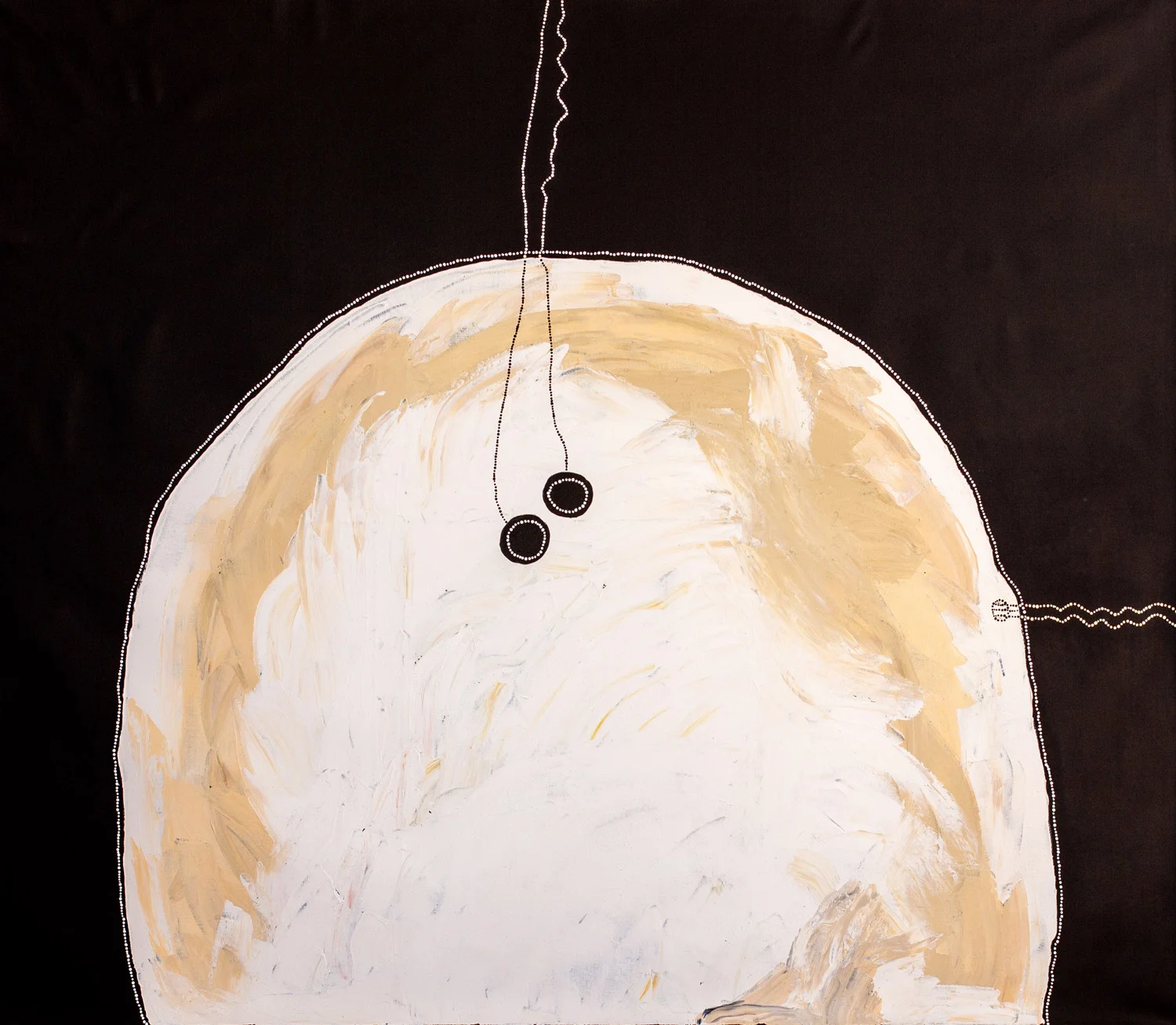
Lawrence, a senior lawman from Spinifex has painted his country of Pukara. Pukara holds the Wati Kutjara Tjukurpa (Two Men Creation story) and often these Tjukurpa sites are linked through story and geography. In this case Pukara is linked to a well known Western Desert area called Mituna, the place of Lawrences birth. Pukara is a site in which two large snakes, a father and son are travelling on initiation business. Often when an area or story are sacred details are limited. In this case Lawrence has mentioned certain symbols he's used to represent the story, the two large circular motifs are both the two main water holes at Pukara and also the father and son. The lines represent the men and their movement through the country. They are responsible for many of the waterholes and geographical features in the northern portion of the Spinifex area.

Fred Grant
2019, acrylic on linen
1370 x 900 mm
Cat No. 19-287
Selected: Men from Spinifex Country
Spinifex Arts Project
Fred Grant has depicted the significant site of Tjanputa situated in the northeast of traditional Spinifex Lands. This site holds the Wati Kutjara Tjukurpa (Two Men Creation Line), a far reaching narrative that follows the movement of Two Men, both lizards, a sand goanna and a black nosed monitor as they traverse the Spinifex Country. These are creation beings who make the physical realm as they move through it, leaving indelible reminders within the landscape of their power and presence.

Lawrence Pennington
2019, acrylic on linen
1100 x 850 mm
Cat No. 19-222
Selected: Men from Spinifex Country
Spinifex Arts Project
Lawrence is a senior Spinifex man who has painted the country where he was born and some of the significant sites in the surrounding country. Growing up as a young boy and then following his initiations as a young man in this country Lawrence holds intimate knowledge of the sites, the stories and the features. Here he includes the rockholes from his country around Mituna.

Fred Grant
2019, acrylic on linen
2000 x 1370 mm
Cat No. 19-175
Selected: Men from Spinifex Country
Spinifex Arts Project
Fred Grant uses the well worn paths of his upbringing to guide the painting to the culturally significant sites that formed him from birth. Here he depicts sites of Wati Mukara Tjukurpa (Small Desert Marsupial) A creation line that encompasses Yalung, where wait mukara dug for maku (witchery grub) then departed for the site of Mampanga before moving toward unanykitjiri where the famed Wati Kutjara Tjukurpa (Two Men Creation Line) intersects. These are creation beings and as such, they shaped the landscape as they moved through it. Leaving indelible physical reminders of their power and presence that still exist today.

Lawrence Pennington
2019, acrylic on linen
950 x 850 mm
Cat No. 19-225
Selected: Men from Spinifex Country
Spinifex Arts Project
Lawrence Pennington is a senior Spinifex traditional owner who has a vast knowledge of Spinifex Lands and the Creation Lines that manifest throughout. Here Lawrence has depicted the significant site of Pukara to the north of the Spinifex Lands. Pukara is the home of the famed Wati Kutjara Tjukurpa (Two Men Creation Line) and follows two Wanampi (Magical Water Serpent) a father and son as they travel south through Spinifex Country manifesting the landscape as they pass. These Songlines are still used today as a cultural guide and moral compass for the Spinifex People.

Fred Grant
2019, acrylic on linen
2300 x 2000 mm
Cat No. 19-253
Selected: Men from Spinifex Country
Spinifex Arts Project
Fred Grant depicts the significant sites in a vast country that formed him from birth. He paints the well worn paths that he and his immediate families followed with the seasons. Fred talks of Mampanya where his kami (grandfather) and uncle grew him up and where Maku Tjuta Tjukurpa (Witchetty Grub Creation Line) is present. He points to Tjatu, where the Wati Kutjara Tjukurpa (Two Men Creation Line) mainfests within the two water sources. Or Anganunya to the north that is home for the Walawuru Tjukurpa (Wedge Tailed Eagle Creation Line). He elaborates with each, expanding the narrative and placing himself in the landscape as the eagle parents search for their lost children who have made their way north to the significant site of Nyuman. The parents had been chasing the nganamara (mallee fowl) and had neglected to watch their young ones. He talks of the two men as having been sitting there with them as they feasted. He knows the stories intimately. These are the religious and moral epics that were narrated to Fred from birth and continue to be passed on today and the oral creationist history that guide Anangu as they go about their daily business.
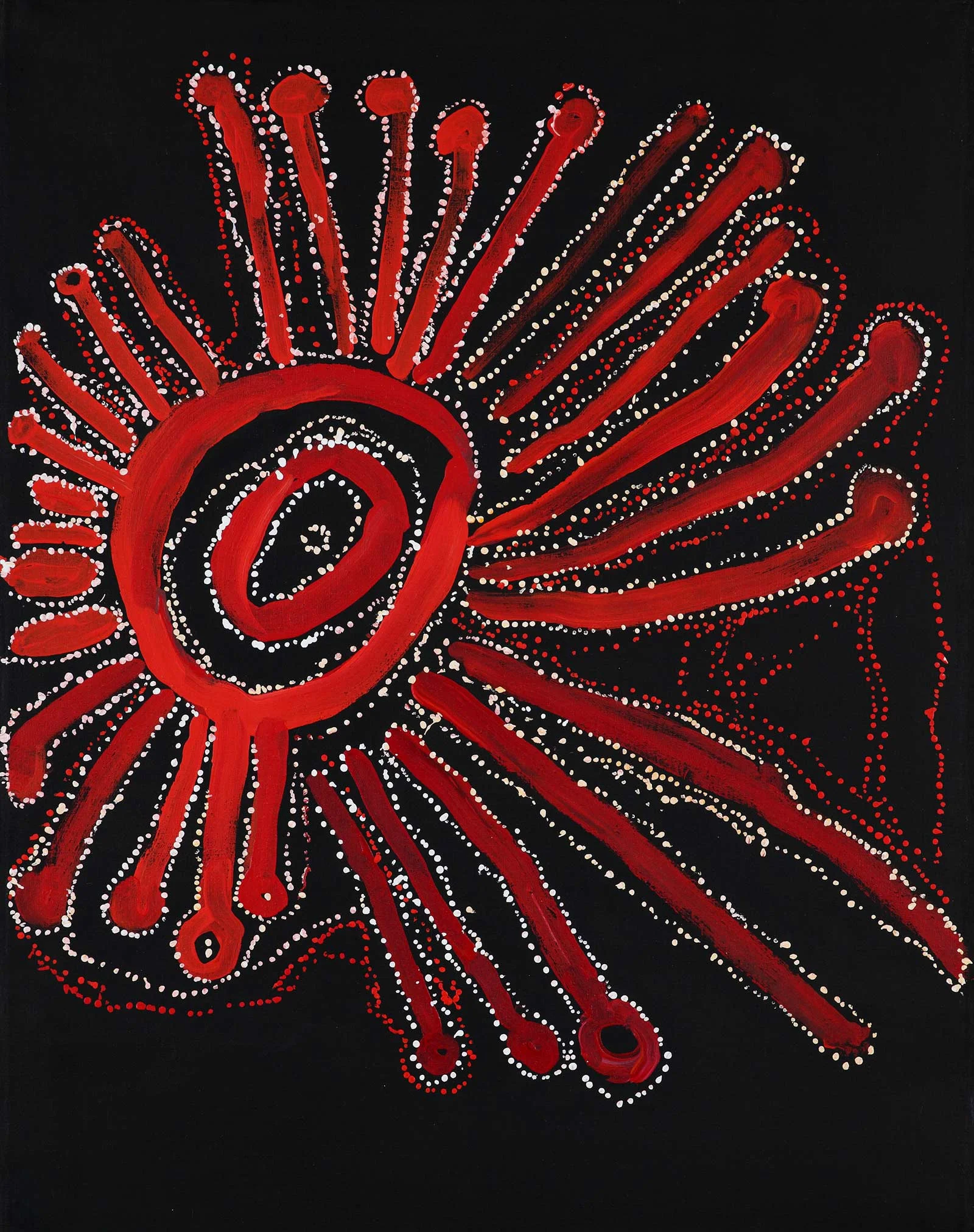
Lawrence Pennington
2019, acrylic on linen
1100 x 850 mm
Cat No. 19-233
Selected: Men from Spinifex Country
Spinifex Arts Project
Lawrence, a senior lawman from Spinifex has painted his country of Mitutu, the place of his birth. As with many Spinifex Tjukurpa places are linked through story and geography. In this case Mitutu is clearly linked to a well known Western Desert area called Pukara. Pukara is a site in which two large snakes, a father and son are travelling on initiation business. The places Lawrence paints are often sacred or have sacred aspects to them and as such details are sketchy. Lawrence has mentioned certain elements of story associated with particular water places. One such character is Ngarultji the Wati Lungkutja (the blue tongue lizard man) who is travelling to Pukara. He also mentions an ancestral being "Murtja" who expired at this place after seeing the snakes at Pukara involved in a spear fight. The sites painted here include along with Mituna and Pukara; Kukulywa, Mukurara and Malaputa, The trees are kurku, mulga trees and the roots are depicted reaching into water below the surface.

Fred Grant
2019, acrylic on linen
1370 x 1100mm
Cat No. 19-292
Selected: Men from Spinifex Country
Spinifex Arts Project

Lawrence Pennington
2019, acrylic on linen
1370 x 1100 mm
Cat No. 19-289
Selected: Men from Spinifex Country
Spinifex Arts Project
Lawrence Pennington has painted Pukara, the home to the Wati Kutjara Tjukurpa. Pukara is depicted by the large circular motif centrally located in the work. The numerous smaller circles represent the many other rock holes in the vicinity where water can be found. Many of these are not permanent water sources, only holding water for a short time after rain. Pukara however is a permanent large water hole guarded by the Two Men, a father and son serpent. These men can be unpredictable and dangerous so upmost caution must be used when approaching this site. It holds a very strong men's Tjukurpa and is therefore m ill-millpa (sacred). The public outline of the story is recited in hushed tones signifying this is not a place to be trifled with.

Lawrence Pennington
2019, acrylic on linen
1370 x 900 mm
Cat No. 19-290
Selected: Men from Spinifex Country
Spinifex Arts Project
Lawrence Pennington touches the deepest qualities of the Tjukurpa in the unseen, taking the broad brush to minimal resemblance of the characters that inhabited the first journey. He guides the significant sites of Mituna and Pukara effortlessly onto the canvas, channelling the essence of Wati Kutjara Tjukurpa (Two Men Creation Line) from a time before when Lawrence walked throughout Spinifex Country. A time when he walked with the Song, following the physical manifestation in the landscape, left by the creation beings, of the stories that made it so and of the characters that played out the journey.

Lawrence Pennington
2019, acrylic on linen
1370 x 900 mm
Cat No. 19-291
Selected: Men from Spinifex Country
Spinifex Arts Project
Lawrence Pennington touches the deepest qualities of the Tjukurpa in the unseen, taking the broad brush to minimal resemblance of the characters that inhabited the first journey. He guides the significant site of Nyuman effortlessly onto the canvas, channelling the essence of Walawuru Tjukurpa (Eagle Creation Line) from a time before when Lawrence walked throughout Spinifex Country. A time when he walked with the Song, following the physical manifestation in the landscape, left by the creation beings, of the stories that made it so, of the characters that played out the journey.
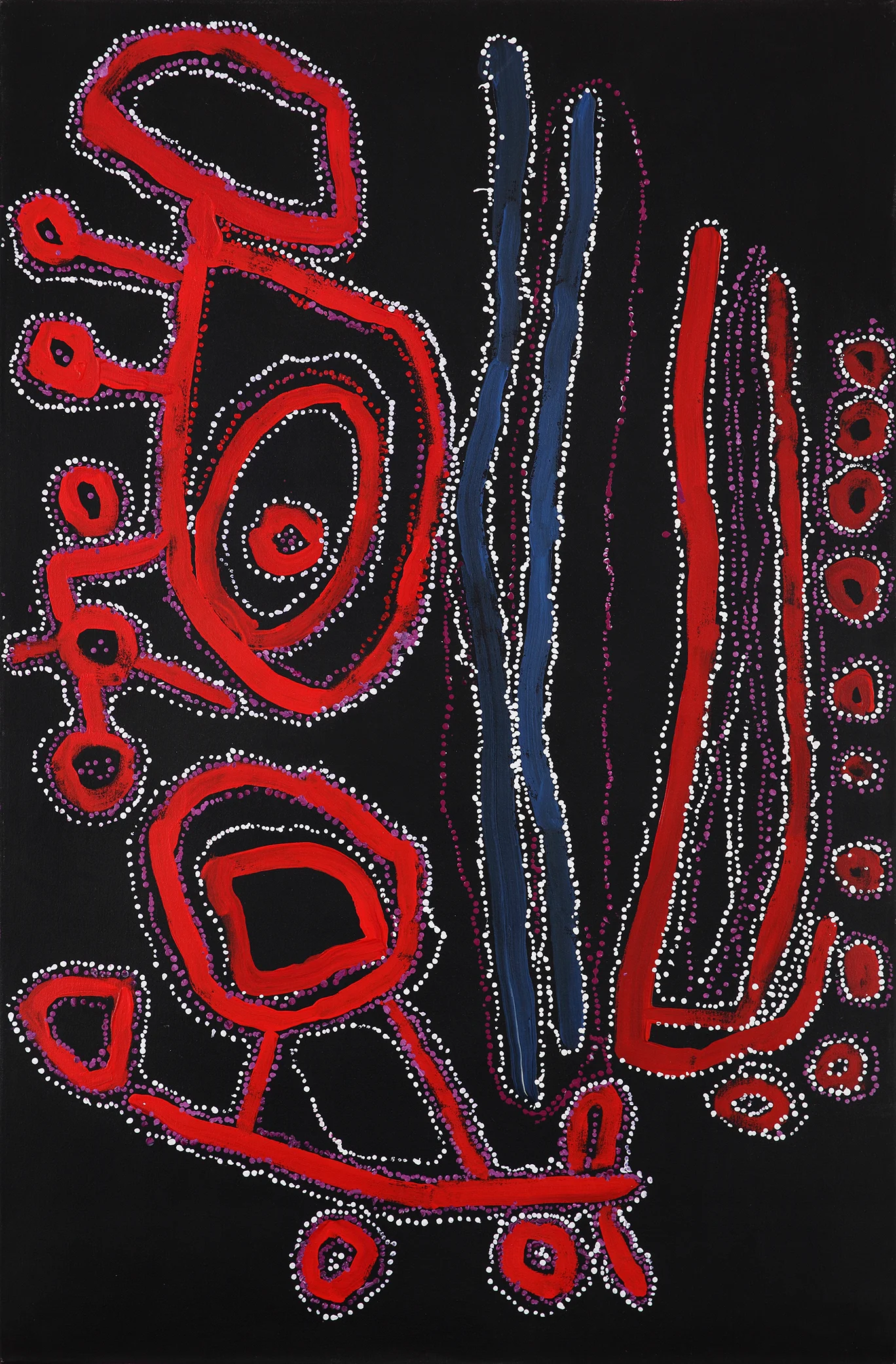
Lawrence Pennington
2017, acrylic on linen
1370 x 900 mm
Cat No. 17-220
Selected: Men from Spinifex Country
Spinifex Arts Project
Lawrence, a senior lawman from Spinifex has painted his country of Pukara. Pukara holds the Wati Kutjara Tjukurpa (Two Men Creation story) and often these Tjukurpa sites are linked through story and geography. In this case Pukara is linked to a well known Western Desert area called Mituna, the place of Lawrence’s birth. Pukara is a site in which two large snakes, a father and son are travelling on initiation business. Often when an area or story are sacred, details are limited. In this case Lawrence has mentioned certain symbols he's used to represent the story, the two large circular motifs are both the two main water holes at Pukara and also the father and son. The lines represent the men and their movement through the country. They are responsible for many of the waterholes and geographical features in the northern portion of the Spinifex area.

Lawrence Pennington
2019, acrylic on linen
1370 x 900 mm
Cat No. 19-293
Selected: Men from Spinifex Country
Spinifex Arts Project

Lawrence Pennington
2018, acrylic on linen
1100 x 850 mm
Cat No. 18-14
Selected: Men from Spinifex Country
Spinifex Arts Project
Timo Hogan
2019, acrylic on linen
1370 x 1100 mm
Cat No. 19-119
Selected: Men from Spinifex Country
Spinifex Arts Project
On exhibition at Outstation Gallery
Timo has depicted his significant site of Lake Baker situated to the northwest of traditional Spinifex Lands. It is a large salt pan that holds the important Wati Kutjara Tjukurpa (Two Men Creation Line) and involves two ancestral beings who shape the landscape as they move through it. The rock hole at Lake Baker is said to very dangerous and is a 'Men Only' site where certain ceremonial protocols must be observed. Timo talks of a bathing ritual that must be performed to appease the Wanampi before one can continue through the nearby country.